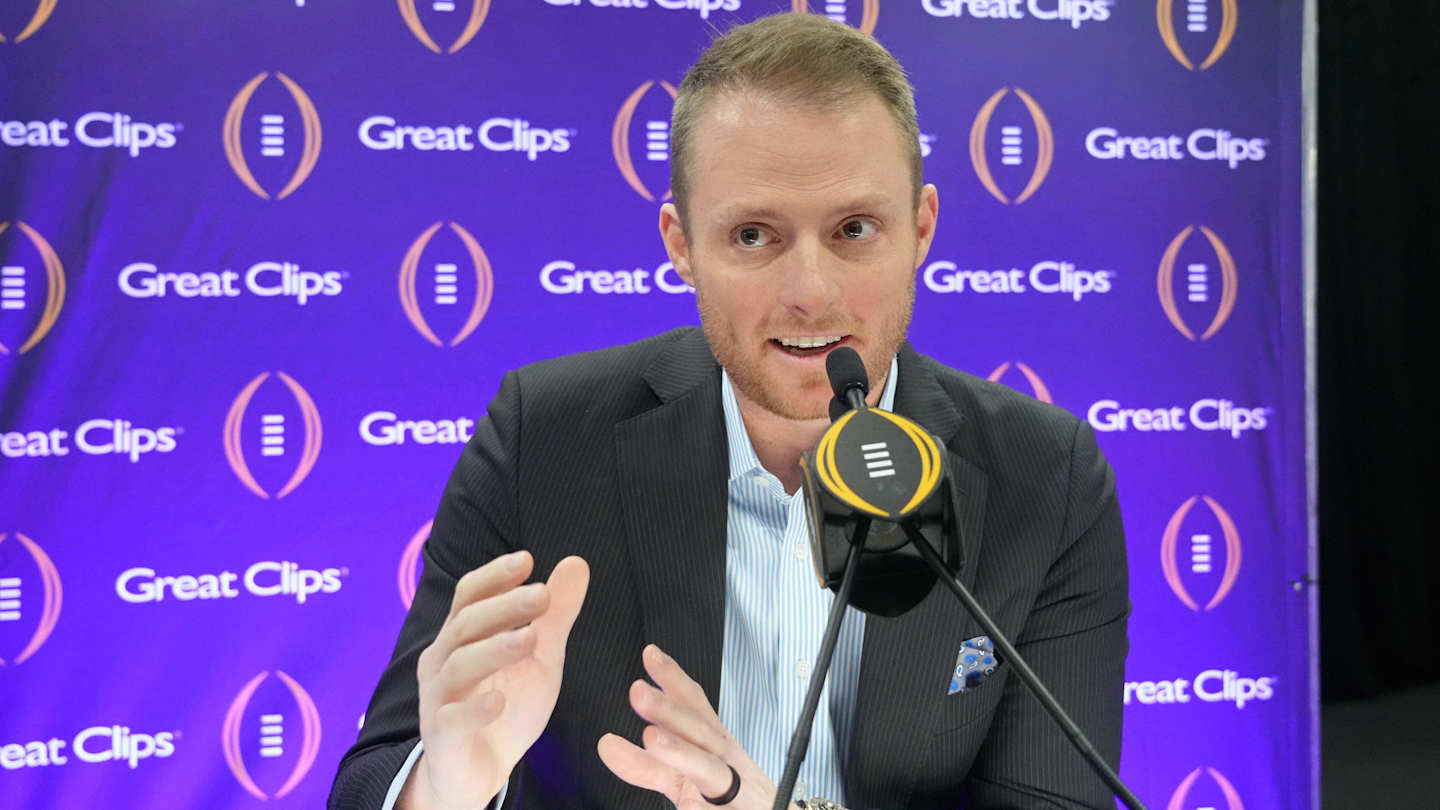
Why Greg McElroy Touts USC Football as a 2026 National Title Contender
When acclaimed college football analyst Greg McElroy names his potential national title contenders for 2026, and Usc Football appears on that coveted list alongside perennial powerhouses like Alabama and emerging forces like Penn State, it raises eyebrows and sparks conversation. While the Trojans have faced their share of challenges and transitions in recent years, McElroy's vision isn't merely speculative; it's rooted in a deep understanding of the program's storied past, its current trajectory under coach Lincoln Riley, and the evolving landscape of college football. So, what exactly makes USC a compelling pick for a championship run just a few years down the line?
The Undeniable Legacy of Usc Football: A Foundation for Future Glory
To understand the potential of Usc Football, one must first appreciate its rich and illustrious history. Established in 1888, the Trojans program has long been synonymous with excellence, amassing over 800 victories and an impressive 58 bowl game appearances, boasting a 37-21 record. The University of Southern California officially recognizes nine national championships (1931, 1932, 1962, 1967, 1972, 1974, 1978, 2003, and 2004), solidifying its place among college football's elite. Under legendary coaches like Howard Jones, who delivered back-to-back titles in the early 1930s, and Pete Carroll, who engineered a dynasty in the early 2000s, USC consistently demonstrated its capacity for dominance. Carroll's teams, epitomized by the 2007 squad's decisive Rose Bowl victory and subsequent high rankings (No. 2 in Coaches Poll, No. 3 in AP Poll), showcased the program's peak performance ability. To delve deeper into this incredible history, read our article: USC Football Dynasty: Legendary Coaches, Heisman Victories, and 9 Official National Titles.
The program's prestige is further amplified by its remarkable track record of producing Heisman Trophy winners – a record eight to be exact, including icons like O.J. Simpson, Marcus Allen, Carson Palmer, Matt Leinart, and most recently, Caleb Williams. Many of these players, along with others like Ronnie Lott and Troy Polamalu, went on to become Pro Football Hall of Famers, creating an unparalleled pipeline to professional success. Playing home games at the historic Los Angeles Memorial Coliseum since 1923, with its 77,500 capacity, provides an iconic backdrop that resonates with tradition and ambition. This deep-rooted legacy of winning, coupled with an ability to attract and develop elite talent, forms the psychological and historical bedrock upon which future success, like a 2026 national title bid, can be built.
Lincoln Riley's Vision: The Blueprint for a Big Ten Powerhouse
Greg McElroy's optimism for Usc Football in 2026 largely stems from the presence of head coach Lincoln Riley, who took the helm in 2022. Riley's reputation as an offensive innovator and a quarterback guru precedes him. His ability to craft high-octane offenses and develop elite signal-callers is well-documented, making him a prime candidate to lead USC back to national prominence. While his initial seasons have shown flashes of brilliance mixed with defensive struggles, a 2026 timeline allows for the full maturation of Riley's system and his recruiting classes.
The Trojans' transition to the Big Ten Conference in 2024 marks a significant chapter. This move presents both considerable challenges and immense opportunities. The Big Ten is known for its physical, smash-mouth football, particularly on the defensive line and in the run game – a stark contrast to the often more wide-open style of the Pac-12. For USC to contend, Riley's program must adapt. This means prioritizing robust defensive recruiting and development, a shift that is already underway. By 2026, the team will have had two full seasons to acclimate to the Big Ten's demands, refine their strategy, and solidify a roster capable of competing week-in and week-out against the conference's best. The increased national exposure and broader recruiting footprint that comes with Big Ten membership further bolster USC's ability to attract top-tier talent, which is crucial for building a championship roster.
Navigating Adversity and Building for a Championship Future
The path to national glory is rarely without its bumps, and Usc Football has faced significant adversity in its history. The program endured severe NCAA sanctions stemming from violations involving improper benefits provided to running back Reggie Bush during his 2003-2005 tenure. These penalties, which included vacated wins (notably the 2004 national title), scholarship reductions, and a postseason ban, cast a long shadow. However, recent developments, such as the restoration of Reggie Bush's 2005 Heisman Trophy in 2024 amid evolving Name, Image, and Likeness (NIL) precedents, signal a potential turning point. This act of restoration not only provides a measure of closure for a controversial chapter but also underscores the changing dynamics of college sports. For more on this pivotal moment, see our article: Reggie Bush Heisman Restored: The Impact on USC Football's Legacy.
Looking towards 2026, the program's ability to overcome these past challenges and leverage new opportunities will be key. For McElroy's prediction to materialize, several critical elements must fall into place:
- Consistent Elite Recruiting: Riley and his staff must continue to land top-ranked recruiting classes, particularly focusing on positions of need like the defensive front, offensive line, and depth at quarterback.
- Player Development: It's not just about attracting talent; it's about developing it. The coaching staff's ability to transform highly-touted recruits into impact players will be paramount.
- Defensive Evolution: USC's defense must ascend to an elite level. While Riley's offensive prowess is undeniable, a championship team in the Big Ten needs a defense that can dictate terms and make crucial stops.
- Team Cohesion and Culture: Building a resilient team culture that can withstand the rigors of a challenging Big Ten schedule and the pressure of national title contention is vital.
These are not small feats, but the groundwork laid in 2024 and 2025 will define the roster and team identity that takes the field in 2026.
Key Factors Supporting McElroy's 2026 Optimism
Greg McElroy's confidence in Usc Football as a 2026 national title contender isn't just a nod to historical success, but a forward-looking assessment of several strategic advantages:
- Recruiting Momentum and NIL Leverage: Lincoln Riley's coaching appeal combined with USC's location in a prime media market and its storied brand provides a significant advantage in the NIL era. Top recruits are increasingly drawn to programs where they can maximize their personal brand and earning potential, and USC is exceptionally well-positioned to capitalize on this trend. This helps secure the talent necessary for deep roster depth, a hallmark of championship teams.
- Quarterback Development: Riley has consistently developed Heisman-caliber quarterbacks. While Caleb Williams moved on, the program is adept at attracting and refining top QB talent, ensuring a strong foundation for the offense. By 2026, whoever is under center for USC will have benefited from years in Riley's system.
- Big Ten Integration and Experience: By the 2026 season, USC will have two full seasons of Big Ten play under its belt. This experience will be invaluable, allowing the coaching staff and players to fully understand the conference's nuances, opponents, and the physical demands of a Big Ten schedule. They will no longer be newcomers but established members, better prepared to navigate the championship path.
- Modern College Football Landscape: The transfer portal and evolving NIL rules mean that roster construction can be quicker and more dynamic than ever before. USC, with its resources and attractiveness, can strategically use the portal to fill immediate needs and bring in experienced talent, accelerating the building process for 2026.
These factors, combined with the unwavering commitment to excellence that defines Usc Football, paint a compelling picture for a program poised to return to the summit of college football.
Conclusion
Greg McElroy's bold prediction that Usc Football will be a legitimate 2026 National Title Contender is more than just analyst chatter; it's a testament to the program's enduring legacy, the strategic vision of Lincoln Riley, and its advantageous position in the modern college football landscape. While challenges remain, the combination of a rich history of championships, a proven offensive mastermind at the helm, a strong recruiting pipeline bolstered by NIL and the transfer portal, and the experience gained from Big Ten integration, provides a solid foundation. As the Trojans continue to build, recruit, and adapt, the prospect of seeing the cardinal and gold hoist the national championship trophy in 2026 transforms from a prediction into a very real possibility.